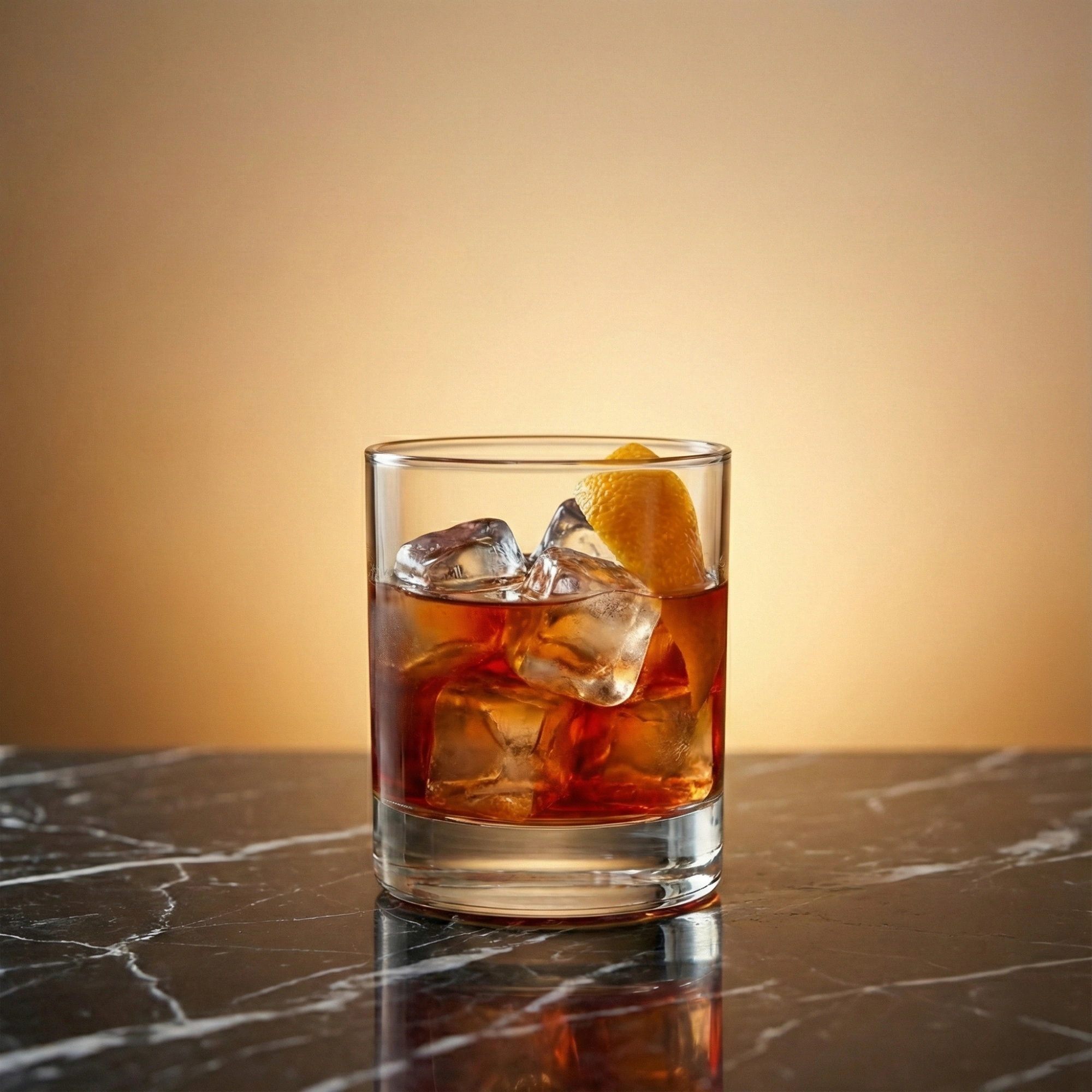
There's a certain charm in ordering a drink that carries a story, a link to a past era, and a precise geographical origin. The Americano cocktail is one of these: an elegant, refreshing, and surprisingly simple aperitif, whose birth is intertwined with the social and cultural dynamics of Italy across two distinct eras.
The genesis of the Americano takes us directly to Milan, specifically to Caffè Campari around 1860. There, Gaspare Campari—founder of the famous bitter liqueur that bears his name—first served what was then known as the "Milano-Torino," a cocktail composed of Campari (born in Milan) and sweet vermouth (originating from Turin). The addition of soda water came early on, creating a lighter, more refreshing variation.
The name "Americano," however, likely emerged much later—during the 1920s and 1930s—when American tourists, fleeing Prohibition in their homeland, flocked to Italy in search of legal drinks. These visitors developed a particular fondness for the bittersweet, effervescent cocktail. Italian bartenders, charmed by their enthusiasm, began calling the drink "Americano" as a nod to its most devoted admirers.
The result was a lighter drink, with a pleasant but less pungent bitterness, and an effervescence that made it perfect as an aperitif before a meal. The drink's literary fame was cemented when Ian Fleming chose it as the very first drink James Bond ever orders in the novels—in "Casino Royale" (1953), Bond sips an Americano at the Hermitage Hotel bar while waiting for Mathis and Vesper Lynd. Bond, ever particular, specified Perrier for his soda and preferred a lemon peel over the traditional orange garnish.
The classic recipe calls for equal parts Campari and sweet vermouth, topped with soda water and garnished with an orange slice. The beauty of the Americano lies precisely in its versatility. The proportion between Campari and vermouth can be easily adjusted to personal taste. Those who prefer a more pronounced bitterness will opt for a higher ratio of Campari, while those who favor a sweeter profile will tend to use more vermouth. The soda, in turn, not only dilutes but adds a freshness and carbonation that cleanses the palate.
The taste is a delicate balance. The characteristic bitterness of Campari blends with the complex sweetness of vermouth, creating an aromatic profile that ranges from herbaceous notes to citrusy and spicy ones. The soda, with its effervescence, adds a lively touch that enhances its drinkability. The orange peel, with its essential oils, releases a citrus aroma that completes the sensory experience.
Today, the Americano is a cornerstone of Italian and international aperitif culture. It is the cocktail that influenced the creation of other great classics, most notably the Negroni—born when Count Camillo Negroni reportedly asked a Florentine bartender to replace the soda with gin. The Americano's simplicity and balanced taste make it a timeless choice for those seeking a drink that is both sophisticated and accessible. A small piece of Italian history, served in a glass.